

Counseling for Insomnia in Florida: What It Is, How It Works, and Who It Helps
Counseling for insomnia is a structured, evidence-based treatment that addresses the thoughts, behaviors, and habits keeping you awake at night. For Florida residents struggling with chronic sleep problems, professional counseling offers a drug-free path to lasting relief that goes far beyond over-the-counter sleep aids.
Key Takeaways
Cognitive Behavioral Therapy for Insomnia (CBT-I) is the gold-standard, first-line treatment recommended by sleep specialists and the American Academy of Sleep Medicine.
Counseling for insomnia targets the root psychological causes of poor sleep, not just the symptoms.
Florida residents have access to both in-person and telehealth counseling options, making treatment more accessible than ever.
Most people see measurable improvement in sleep quality within 6 to 8 weeks of structured therapy.
Combining sleep restriction therapy, cognitive restructuring, and relaxation techniques produces the strongest results.
Choosing a therapist trained specifically in behavioral sleep medicine makes a significant difference in outcomes.
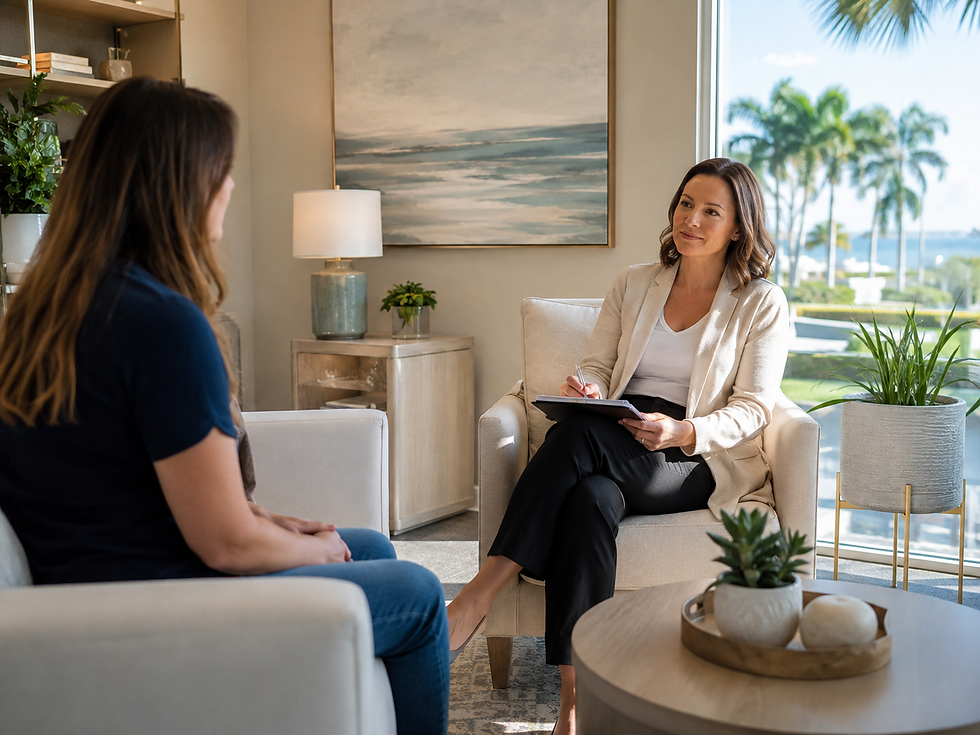
Why So Many Floridians Struggle With Sleep
Florida ranks consistently among the states with the highest rates of sleep deprivation. According to CDC data, roughly 1 in 3 American adults does not get enough sleep on a regular basis, and Florida's unique combination of year-round heat, a large retiree population, high-stress urban centers like Miami and Tampa, and a tourism-driven economy that keeps schedules unpredictable all contribute to elevated insomnia rates across the state.
Insomnia is not simply about lying awake at night. It shows up as:
Difficulty falling asleep even when you're exhausted
Waking up multiple times during the night
Rising too early and being unable to fall back to sleep
Feeling unrefreshed after a full night in bed
Daytime fatigue, irritability, and trouble concentrating
When these patterns persist for at least three nights per week for three months or more, clinicians classify the condition as chronic insomnia disorder. At that stage, willpower and chamomile tea are not going to fix the problem. Professional counseling becomes not just helpful but medically advisable.
The economic cost matters too. The RAND Corporation has estimated that sleep deprivation costs the U.S. economy over $411 billion annually in lost productivity. At an individual level, poor sleep is linked to increased risk of cardiovascular disease, Type 2 diabetes, obesity, anxiety disorders, and depression. Getting professional help is not a luxury — it is a health investment.
What Counseling for Insomnia Actually Involves
Many people assume counseling means talking about feelings for an hour each week. Counseling for insomnia in Florida is considerably more targeted than that. The core treatment is Cognitive Behavioral Therapy for Insomnia, known as CBT-I, which the American College of Physicians officially recommends as the first-line treatment over sleep medication.
CBT-I typically involves five to eight structured sessions with a trained therapist. Each session builds on the last and combines several therapeutic components:
Cognitive Restructuring
This component helps you identify and reframe the unhelpful thoughts that keep your brain on high alert at bedtime. Thoughts like "I'll never fall asleep" or "If I don't sleep eight hours, tomorrow will be ruined" create performance anxiety around sleep. A therapist teaches you to challenge and replace these patterns using evidence-based techniques.
Sleep Restriction Therapy
Counterintuitively, one of the most effective CBT-I techniques involves temporarily reducing the time you spend in bed to match your actual sleep time. This builds sleep pressure, consolidates fragmented sleep, and retrains your body clock. It feels uncomfortable at first, but clinical trials consistently show it produces rapid, lasting results.
Stimulus Control
This technique re-establishes the bed as a place your brain automatically associates with sleep rather than wakefulness. If you have spent months lying awake scrolling your phone or watching television in bed, your nervous system has learned to treat the bedroom as a place of activity. Stimulus control breaks that association.
Relaxation and Mindfulness Training
Many insomnia sufferers in Florida report that racing thoughts and physical tension are their biggest barriers to sleep. Therapists incorporate progressive muscle relaxation, diaphragmatic breathing, and mindfulness practices. Techniques like stino mediation can complement traditional CBT-I by cultivating the mental stillness that supports deeper, more restorative sleep.
Sleep Hygiene Education
While sleep hygiene alone rarely cures chronic insomnia, it forms an important foundation. This covers consistent sleep and wake times, light exposure management, caffeine and alcohol timing, and creating a bedroom environment that is cool, dark, and quiet — which in Florida's climate often means addressing humidity and noise from outdoor activity.
How Florida's Telehealth Landscape Has Changed Access
One of the most significant developments for anyone seeking counseling for insomnia in Florida over the past several years is the expansion of telehealth. Florida's telehealth laws were strengthened in 2019 and have remained in place, allowing licensed therapists to deliver CBT-I sessions via secure video platforms to any patient in the state.
This matters for several practical reasons:
Florida's geography means many rural residents in the Panhandle or Central Florida face long drives to reach a specialist.
Snowbirds and seasonal residents can continue treatment without interruption.
Evening and weekend appointment availability is significantly higher through telehealth platforms.
For people whose insomnia is worsened by anxiety about leaving home or disrupting routines, telehealth removes a significant barrier.
Reputable Florida providers offer comprehensive therapy services that include both in-person and virtual CBT-I sessions, ensuring you can access evidence-based treatment in a format that works for your lifestyle and location.
When evaluating a telehealth provider, confirm that the therapist holds an active Florida license, has specific training in behavioral sleep medicine or CBT-I, and uses a HIPAA-compliant platform for your sessions.
Comparing Treatment Options: What Works and What Doesn't
Not all approaches to insomnia are equally effective. The table below compares the most common treatments available to Florida residents.
Treatment | Effectiveness | Duration | Side Effects | Long-Term Results |
CBT-I (Counseling) | High (80%+ improvement) | 6-8 weeks | None | Excellent — gains persist |
Prescription Sleep Medication | Moderate (short-term) | Ongoing | Dependency risk, grogginess | Often returns after stopping |
OTC Sleep Aids (e.g., melatonin) | Low for chronic insomnia | Ongoing | Minimal but limited impact | Poor |
Sleep Hygiene Only | Low for chronic cases | Ongoing | None | Limited on its own |
Relaxation/Meditation Alone | Moderate as complement | Ongoing | None | Good when combined with CBT-I |
The data is clear: CBT-I consistently outperforms medication for long-term sleep improvement. A landmark 2015 meta-analysis published in the Annals of Internal Medicine found that CBT-I improved sleep onset latency by an average of 19 minutes and reduced wake time after sleep onset by 26 minutes, with results that lasted at follow-up assessments conducted a year later.
Things to Know
CBT-I is effective for insomnia that coexists with anxiety, depression, or chronic pain — you do not need to resolve those conditions first.
Florida Medicaid and many private insurance plans cover mental health counseling, but coverage specifically for insomnia treatment varies. Always verify with your insurer before your first appointment.
Some therapists advertise sleep counseling without formal CBT-I training. Ask specifically whether your provider is trained in CBT-I or behavioral sleep medicine.
The initial weeks of sleep restriction therapy may feel like your sleep gets worse before it improves. This is normal and expected.
Digital CBT-I programs (apps like Sleepio or Somryst) are FDA-cleared and can be a cost-effective option if your access to in-person therapists is limited, though they lack the personalization of working with a live clinician.
Insomnia counseling typically costs between $100 and $200 per session out-of-pocket in Florida, though in-network rates with insurance can reduce this significantly.
How to Choose the Right Counselor in Florida
Finding the right professional is one of the most important decisions you will make in your recovery from insomnia. Here are the key factors to evaluate:
Credentials and Specialization
Look for a licensed psychologist, licensed clinical social worker, or licensed mental health counselor with documented CBT-I training. Board certification through the American Board of Sleep Medicine or membership with the Society of Behavioral Sleep Medicine adds an additional layer of verification. General therapists who are not trained in CBT-I may offer helpful support, but they are less likely to produce the structured results that come from an evidence-based protocol.
Assessment Process
A qualified provider will conduct a thorough intake assessment covering your sleep history, medical background, current medications, mental health history, and lifestyle factors. Be cautious of any provider who jumps directly to treatment without a proper evaluation.
Session Structure
Ask how many sessions the program includes, how progress is measured, and whether you will receive a sleep diary or structured worksheets. Effective CBT-I is not open-ended. It follows a protocol, tracks measurable outcomes, and has a clear end point.
Communication and Fit
Your comfort with your therapist matters. You should feel that your concerns are being taken seriously and that the clinician explains the rationale behind each technique. If you are ready to take that first step, you can contactus at SomnusAI to learn more about connecting with qualified sleep counseling professionals in your area.
For a broader overview of providers and services available in Florida and beyond, visiting can give you a clear picture of what a quality sleep therapy practice looks like and what to expect from the process.
Frequently Asked Questions
Q: How long does it take for insomnia counseling to work?
Most people see meaningful improvement in sleep quality within 4 to 8 weeks of consistent CBT-I treatment.
CBT-I follows a structured protocol, so gains typically build session by session. Some patients notice changes as early as the second or third week, particularly after beginning sleep restriction therapy. The full benefits are usually apparent by the end of the 6 to 8 session program.
Q: Is insomnia counseling covered by health insurance in Florida?
Many Florida insurance plans cover mental health counseling, but coverage specifically labeled for insomnia treatment varies by plan and provider.
It is worth calling your insurance company directly to ask whether CBT-I or behavioral sleep therapy is a covered benefit under your plan. Some plans will cover the service under a general mental health diagnosis. Out-of-pocket costs typically range from $100 to $200 per session without coverage.
Q: Can I do insomnia counseling online in Florida?
Yes, Florida's telehealth laws fully support licensed therapists delivering insomnia counseling via secure video platforms to patients anywhere in the state.
Telehealth CBT-I is just as effective as in-person treatment according to multiple clinical studies. The flexibility of online sessions makes it easier to maintain consistency, which is one of the biggest predictors of successful outcomes.
Q: What is the difference between insomnia counseling and sleep coaching?
Insomnia counseling is delivered by a licensed mental health professional and follows an evidence-based clinical protocol; sleep coaching is unregulated and not a medical service.
Sleep coaches can provide helpful general guidance on habits and routines, but they are not qualified to treat chronic insomnia disorder, address co-occurring mental health conditions, or prescribe or recommend clinical interventions. For chronic insomnia, a licensed therapist trained in CBT-I is the appropriate provider.
Q: Do I need a doctor's referral to start insomnia counseling in Florida?
No, Florida does not require a physician referral to access mental health counseling services directly.
You can contact a licensed therapist or counseling practice directly and schedule an intake assessment without a prior medical appointment. However, if your insomnia may have an underlying medical cause such as sleep apnea or restless leg syndrome, seeing a physician or sleep medicine doctor alongside your therapist is advisable.
The Bottom Line on Counseling for Insomnia in Florida
Counseling for insomnia in Florida is one of the most effective, evidence-backed interventions available for anyone who has been struggling with chronic sleep problems. Unlike medication, which manages symptoms while you take it, CBT-I changes the underlying patterns driving your insomnia, giving you tools that continue working long after your final session.
If you have been white-knuckling through bad nights, relying on sleep aids, or simply accepting exhaustion as your new normal, the research is clear: professional counseling works, telehealth has made it more accessible than ever, and the skills you learn stay with you for life. Your next step is to reach out to a qualified sleep therapist in Florida, ask about their CBT-I training, and book an intake assessment. Better sleep is not a distant hope — it is a structured process with a proven track record.


Comments